
Haunted Europe: 5 Spooky Places Worth Exploring

From haunted Scottish graveyards to mysterious castles and underground catacombs, Europe has no shortage of places with chilling stories to tell.
With Halloween just around the corner, it's the perfect time to explore a slightly spookier side of European travel.
After all, when you've got centuries-old castles, medieval streets, ancient burial grounds, and more than a few dark chapters in history, you're bound to pick up a ghost story or two along the way.
But here's what makes these destinations especially interesting: You don't have to believe in ghosts to appreciate them. Behind the legends are fascinating stories of real people, historical events, and places that have survived for centuries.
Whether you're a history buff, a fan of the supernatural, or simply someone who enjoys exploring places a little off the usual tourist trail, these five destinations offer plenty to discover.
1. Greyfriars Kirkyard — Edinburgh, Scotland

Edinburgh is practically made for ghost stories. With its narrow medieval closes, underground vaults, and centuries of sometimes gruesome history, Scotland's capital has earned its reputation as one of Europe's most atmospheric cities.
And few places capture that atmosphere quite like Greyfriars Kirkyard.
Located in Edinburgh's historic Old Town, just a short walk from the Royal Mile, this centuries-old cemetery is filled with weathered gravestones, elaborate monuments, and the final resting places of some notable Scots.
It's also famous for its connection to Greyfriars Bobby, the loyal little dog whose devotion to his deceased owner became one of Edinburgh's most beloved stories.
But Greyfriars has a darker reputation, too.
According to local legend, the notorious Mackenzie Poltergeist haunts a section of the graveyard near the tomb of Sir George Mackenzie, a 17th-century Scottish lawyer associated with the persecution of religious dissenters. Tales of unexplained encounters and strange disturbances have made the cemetery a popular stop on Edinburgh's ghost tours.
I've actually visited Greyfriars Kirkyard, and I can tell you that wandering among those old headstones is quite an experience. It's one of those places where the history feels especially close, even without a ghostly encounter!
Why visit? Greyfriars is an easy addition to a day exploring Edinburgh's Old Town. Combine it with a walking tour of the Royal Mile, a visit to Edinburgh Castle, or an evening ghost tour to discover more of the city's darker history.
2. Bran Castle — Transylvania, Romania

You can't have a Halloween travel list without mentioning Dracula!
Perched dramatically on a rocky outcrop in the Transylvanian countryside, Bran Castle looks exactly like the kind of place where you'd expect a vampire to live.
Dating back to the 14th century, the castle once served as a fortress guarding an important mountain pass through the Carpathian Mountains. Today, visitors can explore its narrow staircases, winding corridors, furnished rooms, and medieval towers, all while enjoying spectacular views of the surrounding countryside.
Of course, Bran Castle is best known as "Dracula's Castle," thanks to its popular association with Bram Stoker's famous fictional vampire.
There's just one small problem with that story: The connection is largely a product of legend and tourism rather than historical fact.
Although Dracula is often associated with Vlad the Impaler, the 15th-century Wallachian ruler whose reputation for brutality became legendary, there's little evidence connecting Vlad directly to Bran Castle. Nor is there evidence that Bram Stoker specifically modeled his fictional castle after it.
Still, with its imposing towers, hidden passages, and dramatic mountain setting, it's easy to understand why the Dracula association has stuck.
And really, does a castle need an actual vampire to be worth exploring?
Why visit? Bran Castle makes a fascinating stop on a trip through Transylvania, particularly when combined with the medieval town of Brașov, the fortified churches of the region, and the beautiful Carpathian Mountains.
3. The Catacombs — Paris, France

When most people picture Paris, they think of the Eiffel Tower, sidewalk cafés, art museums, and romantic strolls along the Seine.
But there's a very different side of Paris hiding beneath its streets.
Deep below the Montparnasse neighborhood lies one of the city's most unusual historical attractions: the Catacombs of Paris.
Originally part of an extensive network of limestone quarries, these underground tunnels were repurposed in the late 18th century when Paris faced a serious problem. Its cemeteries were overcrowded, creating public health concerns for the rapidly growing city.
The solution? Transfer the remains of millions of Parisians into the abandoned quarries beneath the city.
Today, visitors descend roughly 65 feet underground to explore a section of the tunnels, where carefully arranged skulls and bones line the walls in an extraordinary underground ossuary.
It's an unsettling sight, but also a fascinating glimpse into Parisian history and the challenges of urban life centuries ago.
The Catacombs aren't so much a haunted attraction as a reminder that some of the most chilling places in Europe have very real stories behind them.
Why visit? The Catacombs offer a completely different perspective on Paris, especially for travelers who have already seen the city's major landmarks. Advance reservations are strongly recommended, and visitors should be comfortable navigating stairs and underground passages.
4. Kilmainham Gaol — Dublin, Ireland

If the walls of Kilmainham Gaol could talk, they'd have some chilling stories to tell.
Opened in 1796, this former Dublin prison played a central role in Ireland's turbulent history. Over the years, it housed everyone from ordinary criminals to political prisoners fighting for Irish independence.
Some prisoners were held in harsh conditions, including during the devastating years of the Great Famine. Later, several leaders of the 1916 Easter Rising were imprisoned and executed here, making Kilmainham Gaol one of the most significant sites in the story of modern Ireland.
Today, guided tours take visitors through the prison's stark cells, long corridors, and the courtyard where those executions took place.
And, as you might expect from a building with such a difficult history, Kilmainham has accumulated its share of ghost stories.
Local legends describe unexplained footsteps, mysterious sounds, and cell doors seemingly closing on their own.
Whether or not you believe those tales, there's no question that walking through this former prison can be a powerful experience.
It's also an excellent example of why I love incorporating historical sites into a trip. Sometimes the places that leave the biggest impression aren't necessarily the prettiest or most famous. They're the ones that help you better understand the people and events that shaped a destination.
Why visit? Kilmainham Gaol is one of Dublin's most compelling historical attractions, particularly for anyone interested in Irish history and independence. Visits are by guided tour, and tickets frequently sell out, so planning ahead is essential.
5. Chillingham Castle — Northumberland, England
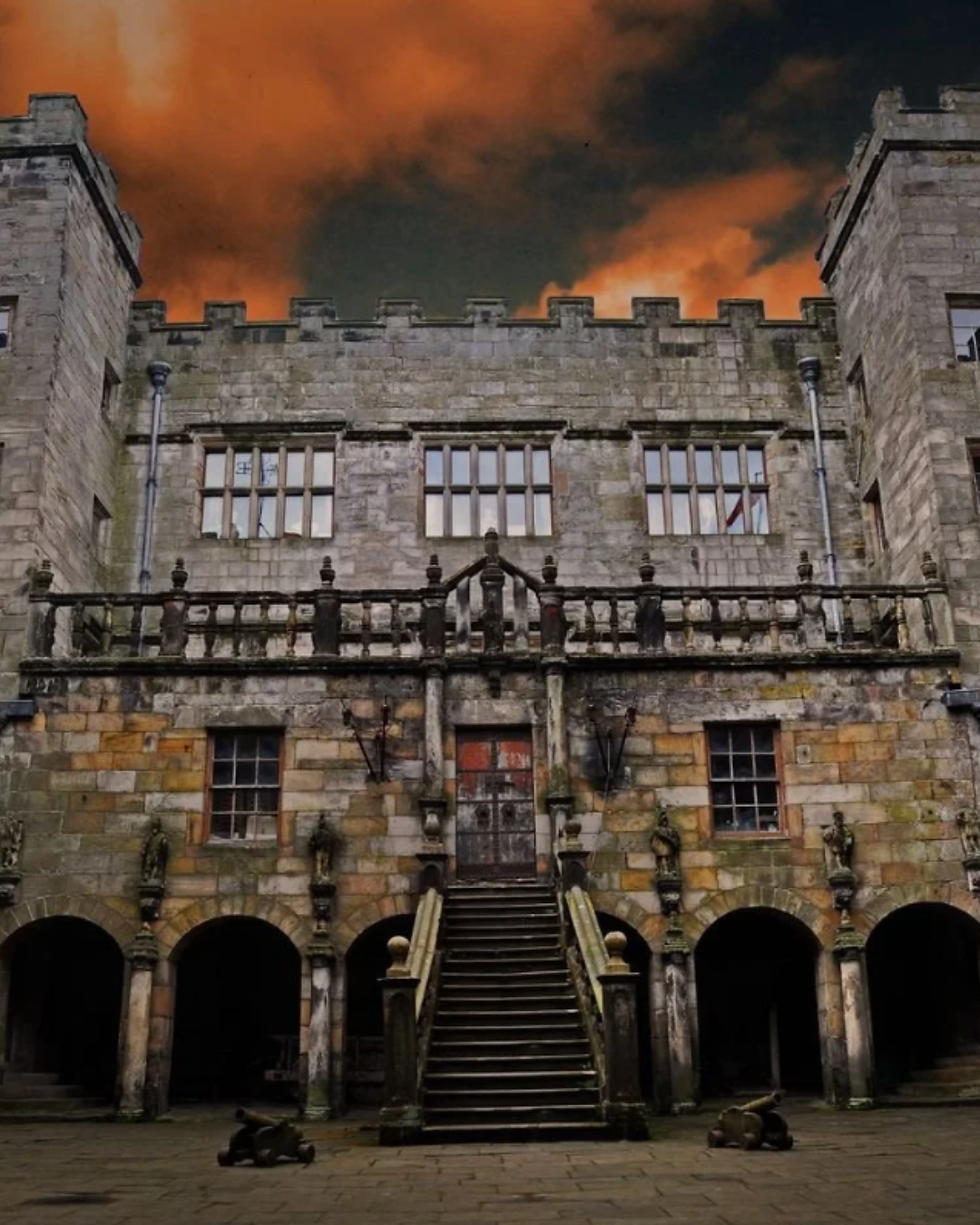
With a name like Chillingham, you almost expect a few ghost stories!
Located in the countryside of Northumberland, not far from the Scottish border, Chillingham Castle is often described as one of Britain's most haunted castles.
Dating back to the 13th century, the castle has witnessed centuries of conflict, political intrigue, and changing fortunes. Its imposing stone walls, ancient rooms, and atmospheric interiors look like something straight out of a Gothic novel.
But it's the castle's legendary residents that attract many curious visitors.
Among the most famous is the Blue Boy, a mysterious apparition whose cries were supposedly heard echoing through the castle. Another is Lady Mary Berkeley, whose ghost is said to wander the corridors, according to local tradition.
Reports of unexplained footsteps, mysterious voices, and ghostly figures have helped establish Chillingham's supernatural reputation.
The castle has embraced that reputation, offering ghost tours and paranormal experiences for visitors interested in exploring its more mysterious side.
But there's plenty to discover during daylight hours, too. Visitors can explore historic rooms, gardens, and displays related to the castle's long and sometimes brutal history.
Why visit? Chillingham Castle is an intriguing addition to a trip through northern England, particularly for travelers exploring Northumberland's castles, countryside, and historic borderlands. It's also within reach of other fascinating sites, including Alnwick Castle and Bamburgh Castle.
More Than Just Ghost Stories
One of the things I love about traveling in Europe is how history is woven into everyday life. You can wander through a medieval neighborhood, explore a castle that's stood for hundreds of years, or visit a place where events unfolded that changed the course of a nation.
And sometimes, those places come with a few ghost stories attached.
Whether you're intrigued by the supernatural or simply enjoy discovering the less conventional side of a destination, these five locations offer something beyond the usual sightseeing experience.
You don't necessarily need to plan an entire vacation around haunted places, either. A historical walking tour, an atmospheric castle visit, or an afternoon exploring an unusual museum can add a memorable twist to an otherwise traditional itinerary.
After all, some of the best travel experiences happen when you venture a little beyond the obvious attractions.
Happy Halloween! 🎃
919-247-4573


Comments